
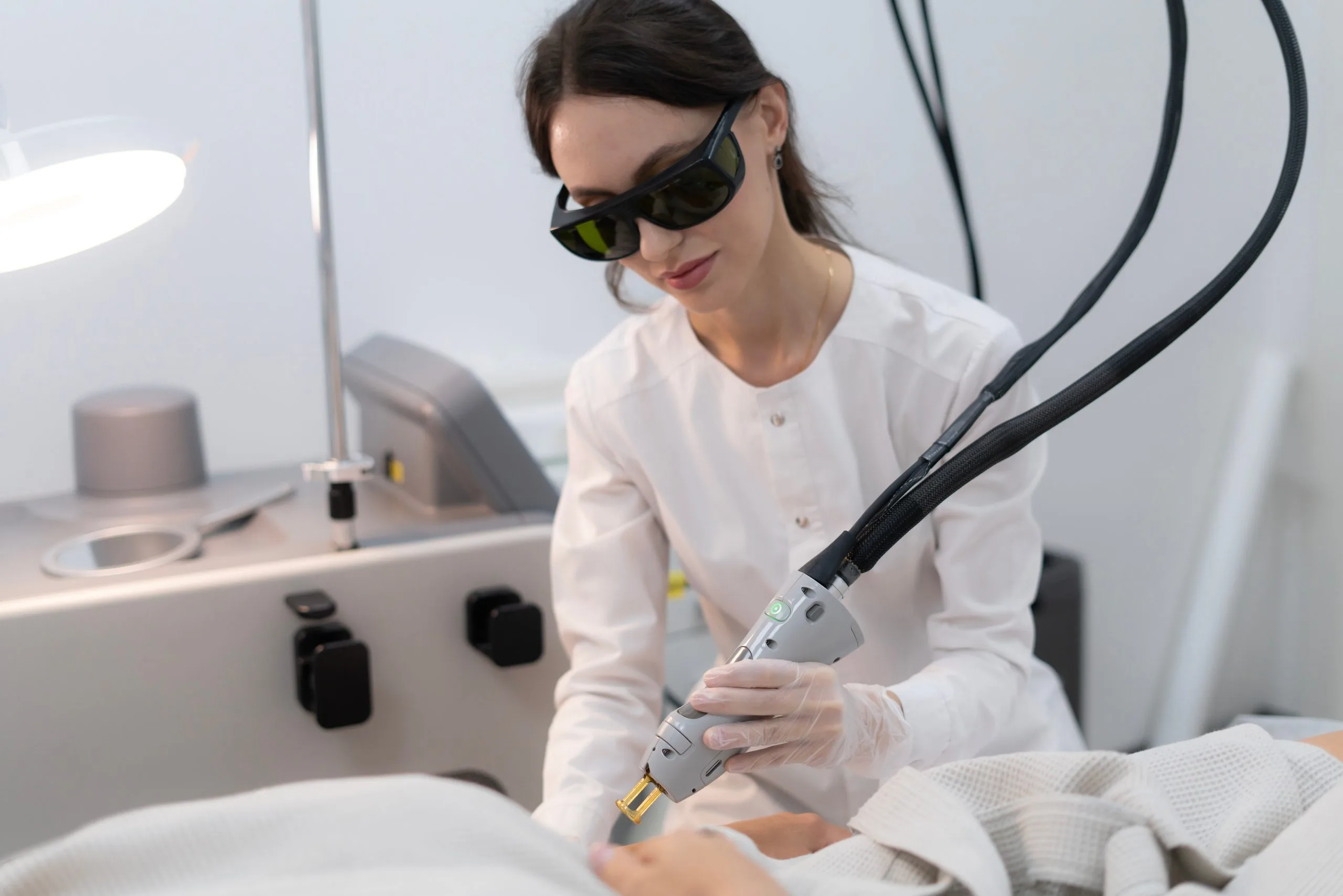
Choosing a laser treatment feels simple until you’re actually in it – suddenly every clinic has a different recommendation, every device sounds life-changing, and two names keep coming up: the AdvaTX laser and the BBL/Halo combo. Here’s what most clinics won’t tell you upfront: these aren’t competing treatments – they’re designed for different skin concerns, skin types, and goals. Once you understand what each one actually does, choosing between them becomes a lot clearer.
The AdvaTX is a multi-wavelength laser system that works beneath the skin’s surface without significantly disrupting the outer layer. It uses a combination of wavelengths – including 1319 nm and 589 nm – to target active acne, acne scarring, redness, rosacea, and chronic inflammation.
What sets it apart is its ability to address the root causes of skin problems rather than just the surface symptoms. It reduces sebaceous (oil) gland activity, kills acne-causing bacteria, and stimulates collagen remodeling – all in one device.
AdvaTX works best for people who struggle with:
Active acne or chronic breakouts
Post-acne redness and dark spots (post-inflammatory hyperpigmentation)
Rosacea and persistent facial flushing
Acne scarring, particularly textural irregularities
Oily or combination skin prone to inflammation
Because AdvaTX is considered a “non-ablative” laser, it doesn’t remove the outer skin layer. That means less downtime – typically just some mild redness for a day or two. Most patients need a series of treatments (usually 4-6 sessions spaced 2-4 weeks apart) to see full results.
BBL (BroadBand Light) and Halo are two separate technologies from Sciton that are frequently offered together because they complement each other so well.
BBL uses intense pulsed light – not a laser in the traditional sense – to target pigmentation, sun damage, broken capillaries, and redness near the surface of the skin. It’s one of the most well-studied light-based treatments available, with research suggesting it may actually alter gene expression to make skin behave more like younger skin over time.
Halo is a hybrid fractional laser that delivers both ablative and non-ablative wavelengths simultaneously. The ablative component resurfaces the outer skin layer to address texture, fine lines, and pore size. The non-ablative component drives deeper collagen stimulation for longer-term firming and tightening.
Together, BBL and Halo tackle photoaging, sun damage, and overall skin quality in a way that’s hard to match with a single device.
BBL/Halo works best for people dealing with:
Sun damage, brown spots, and uneven tone
Fine lines and early signs of aging
Dull, tired-looking skin
Large pores and rough texture
A desire for overall skin rejuvenation and “reset”
The tradeoff is downtime. After Halo, expect 5-7 days of redness, swelling, and skin peeling as the treated tissue sheds. BBL alone has minimal downtime, but when combined with Halo, recovery is more significant. Most patients only need one to two Halo treatments per year to maintain results.
Yes, and many patients eventually do. They’re not mutually exclusive. Some people start with AdvaTX to get their acne and redness under control, then transition to BBL/Halo to address the residual sun damage and texture that remains. Others do a BBL treatment alongside AdvaTX in the same season because the two devices target completely different layers and concerns.
That said, your provider should guide the sequencing. Doing Halo while skin is actively inflamed from acne, for example, isn’t ideal. Getting the right treatment at the right time is what produces the cleanest results.
One factor that often gets glossed over in online comparisons: skin tone plays a real role in which treatment is appropriate for you.
BBL and Halo, particularly the ablative component of Halo, require careful calibration for medium to deep skin tones (Fitzpatrick types IV–VI). In the hands of an experienced provider with appropriate settings, these treatments can be performed safely, but there’s a higher risk of post-inflammatory hyperpigmentation if not done correctly.
AdvaTX’s wavelengths are generally considered safer across a broader range of skin tones, which makes it a strong first option for patients with olive or deeper complexions who are also dealing with acne or rosacea.
This is one reason a consultation isn’t just a formality. A good provider will look at your skin tone, your concerns, and your history together before recommending a treatment path.
Don’t walk into your appointment without asking these:
“Based on my skin, would you start with AdvaTX or BBL/Halo?”
“How many treatments will I realistically need to see results?”
“What does recovery actually look like for my skin type?”
“Is there any reason these treatments wouldn’t be a good fit for me right now?”
“Do you have before-and-after photos of patients with similar concerns and skin tones?”
A provider who gives you confident, specific answers – not vague reassurances – is one worth trusting.
If your primary concern is acne, rosacea, or chronic redness, AdvaTX is likely your starting point. It’s targeted, lower-downtime, and addresses the biological drivers of those conditions rather than just masking them.
If your skin is relatively clear but you’re bothered by sun damage, uneven pigmentation, fine lines, or overall dullness, BBL/Halo is a powerful choice that delivers visible skin-quality improvements most people notice within weeks.
And if you want to address all of the above over time? Both treatments can absolutely be part of your longer-term skin health plan.
The best investment you can make right now is a thorough consultation with a provider who offers both platforms and has no financial reason to push you toward one over the other. Your skin is specific. Your treatment should be too.

About the Author
LuxeSkin Med Spa
LuxeSkin Med Spa was created for individuals who appreciate luxury, precision, and highly personalized care. Our boutique space offers a discreet, high-end environment with private parking for convenience, ensuring that every visit is stress-free, comfortable, and tailored to your needs.
April 28, 2026